
Published: 3 November 2026 (IST) | New Delhi: India will need approximately $220 billion in clean-energy investment between 2027 and 2030 to support its 500-gigawatt non-fossil electricity-capacity target, according to the Ministry of New and Renewable Energy (MNRE). The funding requirement was outlined ahead of the Bharat Renewable Energy Summit & Expo 2026, which Prime Minister Narendra Modi inaugurated in New Delhi on November 2.
At the summit, Modi called for a faster shift towards clean power, saying energy security is closely linked to economic security. He urged wider use of solar energy across government buildings, schools, colleges, hospitals and street-lighting systems, and called for indigenous energy-storage solutions and additional battery-storage capacity.
India’s 500 GW target and the $220 billion requirement
MNRE Secretary Santosh Sarangi said India has 308 GW of installed non-fossil fuel-based electricity capacity and is on course to reach 500 GW by 2030. The ministry estimates that around $220 billion in investment will be required between 2027 and 2030, alongside faster deployment of energy storage, stronger transmission networks and expanded domestic manufacturing.
The $220 billion figure is an estimate of the investment needed across the clean-energy ecosystem; it is not a single government budget allocation or an already-approved spending package. The requirement covers the wider task of adding generation capacity and ensuring that electricity can be stored and moved reliably across the grid.
PM Modi’s focus on solar power and battery storage
Addressing the inaugural session on November 2, the Prime Minister said that India’s growth had remained strong despite disruptions linked to the West Asia crisis. He argued that reducing dependence on fossil fuels and expanding clean-energy capacity would strengthen the country’s energy security.
Modi said more than 44,000 government buildings had already been connected to solar power, generating annual savings of about ₹700 crore, according to reports of his address. He urged public authorities to extend solar adoption to more government buildings and essential public infrastructure.
He also called for home-grown energy-storage technology and new battery-storage capacity so that electricity generated from solar and other renewable sources can be used more reliably when generation falls or demand rises. The Prime Minister highlighted green hydrogen as another area in which India is seeking to build domestic capability.
Bharat RE 2026 brings global energy stakeholders to Delhi
The four-day Bharat Renewable Energy Summit & Expo is being held at Bharat Mandapam from November 2 to 5 under the theme “Invest. Innovate. Inspire.” The Prime Minister’s Office said the event is expected to bring together participants from more than 130 countries, including over 40 ministers. Nine country partners and 13 Indian states and Union Territories are participating, while the accompanying expo features more than 400 exhibitors.
The summit is being held alongside the ninth session of the International Solar Alliance Assembly and the fourth International Conference on Green Hydrogen. The three platforms cover investment, solar-energy cooperation, green-hydrogen technology, storage and wider clean-energy partnerships.
Why storage and transmission matter
Adding solar and wind capacity is only one part of the transition. Renewable generation varies with weather and time of day, so the grid also needs sufficient storage, transmission lines and domestic equipment manufacturing. These systems help move electricity from resource-rich regions to demand centres and make supply more dependable.
India’s stated priorities at the summit therefore extend beyond new power plants: they include battery storage, grid infrastructure, local manufacturing and clean-energy technologies that can support long-term energy security.
Sources
- Press Information Bureau / Ministry of New and Renewable Energy: Bharat Renewable Energy Summit & Expo 2026 details (official release, October 28, 2026).
- Prime Minister’s Office: Official transcript of the Prime Minister’s Bharat RE summit address (Hindi, November 2, 2026).
- The New Indian Express: PM Modi’s remarks on clean energy, solar adoption and storage (November 2, 2026).
- Business Standard: PM Modi calls for clean-energy and storage expansion (November 2, 2026).
- The Tribune / ANI: PM says energy security’s future lies in clean energy (November 2, 2026).
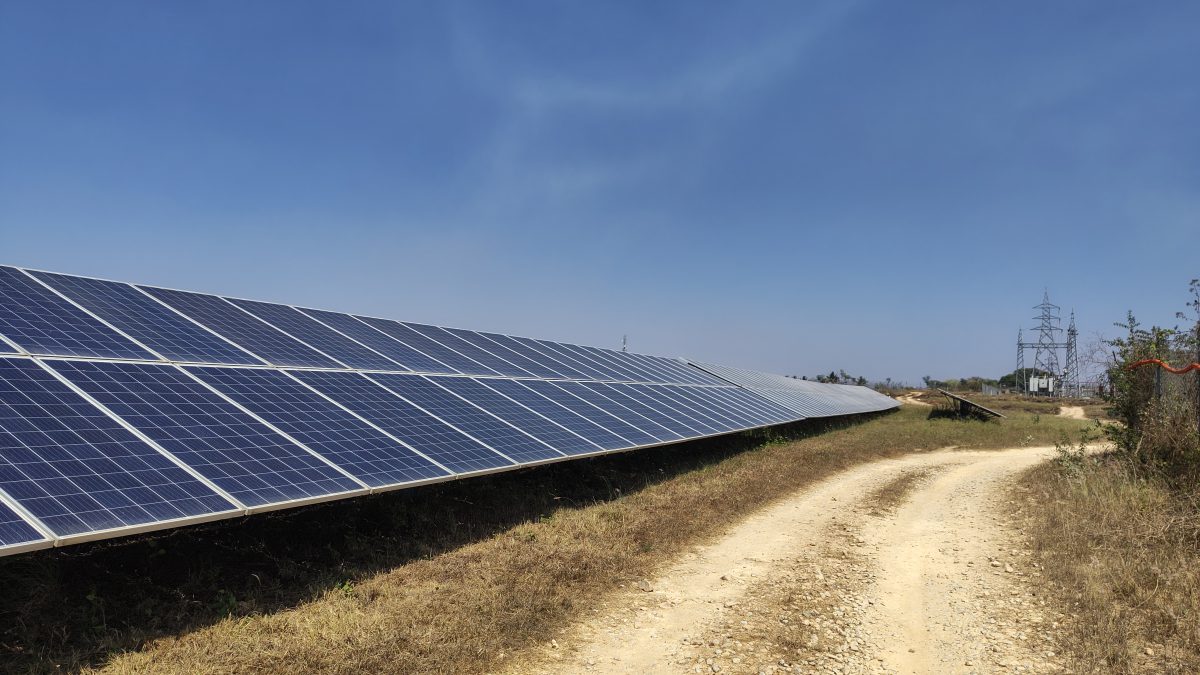
Image note: The featured photograph shows solar panels and grid infrastructure in India. It is a representative image, not a photograph of the Bharat RE summit. Credit: Manjunatha G, WELL Labs / Wikimedia Commons, CC BY-SA 4.0.