

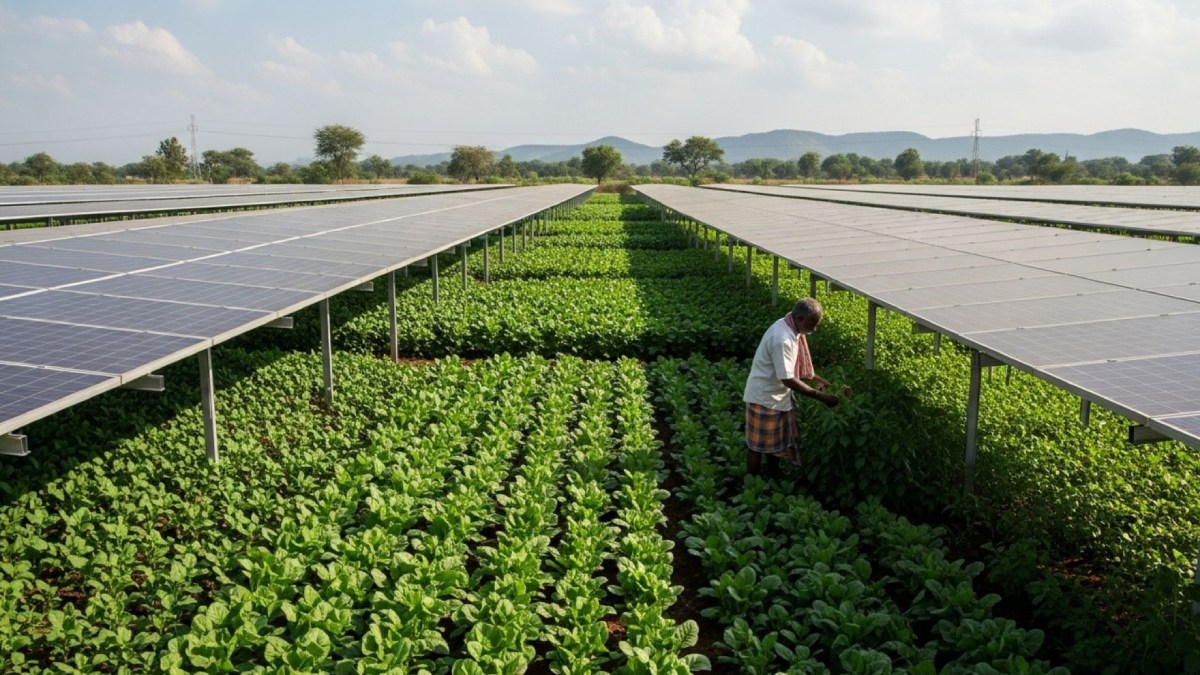
New Delhi, October 22, 2026: Agrivoltaics—the practice of combining solar electricity generation with farming on the same land—is drawing attention as India looks for ways to expand renewable energy while supporting agricultural livelihoods. Reports of possible incentives have renewed interest in the model, although farmers and developers should wait for formal scheme notifications before assuming that any subsidy or financial assistance is available.
What is agrivoltaics?
In an agrivoltaic project, solar panels are arranged so that crops can continue to grow beneath or between them. The design depends on the crop, climate, panel height, spacing, machinery requirements and amount of sunlight needed. Some crops may tolerate partial shade better than others, and a layout that works in one region may not be suitable elsewhere.
Potential benefits for farmers
When carefully designed, an agrivoltaic system can create a second source of value from agricultural land: electricity generation alongside crop production. Depending on the commercial arrangement, a farmer may earn income from energy sales, a lease or a partnership with a project developer. Partial shade can also affect soil temperature and water loss, but outcomes vary by crop and local conditions and should be measured rather than assumed.
For rural communities, projects may create work in installation, maintenance and local services. They may also contribute renewable electricity to the grid. These benefits depend on a reliable connection, workable financing and clear contracts that protect agricultural use.
Challenges and safeguards
Solar infrastructure can require substantial upfront investment, and project economics depend on land suitability, equipment, grid access, power-purchase arrangements and financing costs. Poorly planned installations may interfere with farming equipment, crop access or drainage. Farmers should carefully review ownership and lease terms, the division of revenue, responsibility for repairs, insurance, land restoration and what happens when a contract ends.
What farmers should check next
Before investing, farmers should seek technical advice suited to their crops and location, compare the project’s projected energy revenue with its costs and check all approvals. Any government incentive should be confirmed through a published official notification that clearly states eligibility, application procedures, subsidy amounts and timelines. Unverified claims or verbal promises should not replace written terms.
Agrivoltaics could become one option in India’s broader clean-energy transition, but its success will depend on designs that protect productive farming, transparent contracts and dependable energy infrastructure. The goal should be to complement agriculture—not make farmers dependent on uncertain returns from an unconfirmed scheme.
Updated: October 22, 2026. Any proposed incentives remain subject to official confirmation.