
A personalised mRNA cancer vaccine developed by Moderna and Merck has met the two main efficacy goals in a large Phase 3 trial involving people with high-risk melanoma, according to results announced by the companies and reported on August 20. The experimental treatment was used after surgery alongside Merck’s immunotherapy Keytruda (pembrolizumab) and was compared with Keytruda alone.
The result is an important milestone for personalised cancer vaccines, but it is not the same as a regulatory approval. The companies have not yet released the full numerical Phase 3 data in a peer-reviewed publication. Those details—including the size of the benefit, the duration of follow-up and the complete safety analysis—will be essential for doctors, regulators and patients to judge the treatment.
What the Phase 3 study found
The trial evaluated an experimental personalised therapy called intismeran autogene in patients whose melanoma had been surgically removed but who remained at substantial risk of the disease returning. The study reportedly enrolled 1,137 patients with stage IIB through stage IV melanoma.
According to the companies, the combination of intismeran autogene and Keytruda produced a statistically significant improvement in both of the study’s primary measures:
- Recurrence-free survival: the length of time patients lived without melanoma returning.
- Distant metastasis-free survival: the length of time patients lived without the cancer spreading to a distant part of the body.
These are clinically meaningful endpoints in post-surgery, or adjuvant, melanoma treatment because a therapy’s immediate aim is to eliminate microscopic cancer cells that may remain after an apparently successful operation.
However, the topline announcement did not disclose a hazard ratio, absolute event rates or detailed subgroup results. It therefore establishes that the trial met its statistical goals, but does not yet allow an independent assessment of how large the Phase 3 benefit was for an individual patient.
How a personalised mRNA cancer vaccine works
This treatment should not be confused with a conventional vaccine given to healthy people to prevent an infectious disease. It is a therapeutic cancer vaccine made separately for each patient after cancer has been diagnosed.
The process begins with genetic analysis of a patient’s tumour and a sample of normal tissue. Researchers look for tumour-specific mutations that could generate abnormal proteins, often called neoantigens. A customised mRNA sequence is then designed to carry instructions representing selected neoantigens from that person’s cancer.
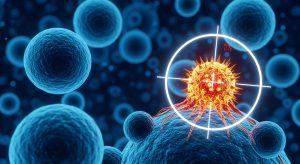
After the mRNA treatment is administered, cells temporarily use those instructions to display the selected targets to the immune system. The goal is to train T cells to recognise and attack cancer cells carrying the same mutations. Because each tumour can contain a different collection of mutations, the final therapy is individually manufactured rather than taken from a standard, identical batch.
Why the vaccine is combined with Keytruda
Cancer can suppress or evade an immune response even when immune cells are capable of recognising it. Keytruda is a checkpoint inhibitor that blocks the PD-1 pathway, one of the mechanisms tumours can use to restrain T cells.
The two treatments therefore have complementary roles. The personalised mRNA component is intended to show the immune system what to target, while Keytruda is intended to release an immune “brake” so that activated T cells can mount a stronger attack. The Phase 3 trial was designed to determine whether this combination prevents recurrence or distant spread more effectively than Keytruda by itself.
Why melanoma is an important test case
Melanoma is a serious form of skin cancer that can spread rapidly when it is not detected and treated early. It has also become a major proving ground for immunotherapy because many melanoma tumours carry a relatively high number of mutations, giving the immune system more possible targets.
Patients in this trial had undergone surgery, but their disease stage placed them at high risk of recurrence. That setting is crucial: a successful adjuvant treatment could destroy remaining cancer cells before they grow into a detectable local recurrence or distant metastasis.
Earlier results provided the rationale
The Phase 3 programme followed a smaller Phase 2b study that had already produced encouraging findings. According to the latest report, five-year follow-up from that earlier trial showed a 49% reduction in the risk of recurrence or death and a 62% reduction in the risk of distant metastasis or death for the combination compared with Keytruda alone.
Those percentages describe relative risk reductions in the earlier study; they do not tell patients their personal probability of recurrence. Absolute risks depend on the population studied, the length of follow-up and individual clinical factors. The larger Phase 3 trial matters because it tests the approach in a much broader group and is better positioned to detect uncommon safety problems and provide a more reliable estimate of benefit.
What is known about safety
The companies said the Phase 3 trial identified no new safety concerns from adding the personalised mRNA treatment to Keytruda. A full assessment must nevertheless wait for the detailed data, including the frequency and severity of adverse events and the number of patients who stopped treatment.
Checkpoint inhibitors such as Keytruda can cause fatigue, rash, diarrhoea and inflammation. In some patients, immune activation can also affect healthy organs. A personalised cancer vaccine may produce injection-site or flu-like reactions, but the exact safety profile of this combination in the Phase 3 population will become clearer only after comprehensive results are presented.
What researchers and regulators will examine next
Several questions remain before the experimental vaccine could become routine care:
- How large is the absolute benefit? Clinicians will want to know how many recurrences were prevented over a defined period, not only whether the statistical comparison was positive.
- Does the benefit persist? Longer follow-up will show whether protection is durable and whether it eventually improves overall survival.
- Which patients benefit most? Subgroup analyses may reveal whether stage, mutation profile, age or other features affect outcomes.
- Can manufacturing be fast and reliable? A bespoke therapy must be designed, produced and delivered within a clinically practical period after surgery.
- What will access and cost look like? Personalised sequencing and manufacturing are more complex than producing a standard medicine.
The companies are expected to present the full findings at a medical meeting and submit the data to regulatory authorities. Until that review is completed, intismeran autogene remains investigational and is not an approved replacement for established melanoma treatment.
Potential beyond melanoma
Moderna and Merck are also studying the personalised mRNA approach in non-small cell lung cancer, bladder cancer and kidney cancer, with earlier-stage work extending to pancreatic and stomach cancers. Other drug developers, including BioNTech and Roche, are pursuing related personalised cancer-vaccine strategies.
Success in one cancer does not guarantee success in another. Tumours differ in their mutation burden, biology and ability to evade immune attack. Still, a positive large late-stage melanoma study strengthens the evidence that mRNA can be used not only for infectious-disease vaccines but also as a flexible platform for directing an individualised immune response against cancer.
Bottom line
The Phase 3 result is a credible and potentially important advance: a customised mRNA therapy plus Keytruda met both main goals in a study of more than 1,100 high-risk melanoma patients. The announcement supports years of work on personalised cancer vaccination and moves the field closer to possible regulatory review.
At the same time, responsible interpretation requires caution. The full Phase 3 numbers are not yet public, the treatment is still investigational, and questions about overall survival, long-term safety, manufacturing, affordability and access remain. Patients should not change treatment based on an early announcement and should discuss melanoma care or clinical-trial participation with a qualified oncology team.
Sources and further reading:
- Business Standard: Moderna, Merck cancer vaccine scores big win in late-stage melanoma trial (August 20, 2026).
- ClinicalTrials.gov search: INTerpath-001.
- US National Cancer Institute: Melanoma treatment information.
This article is for general information and does not provide medical advice.