

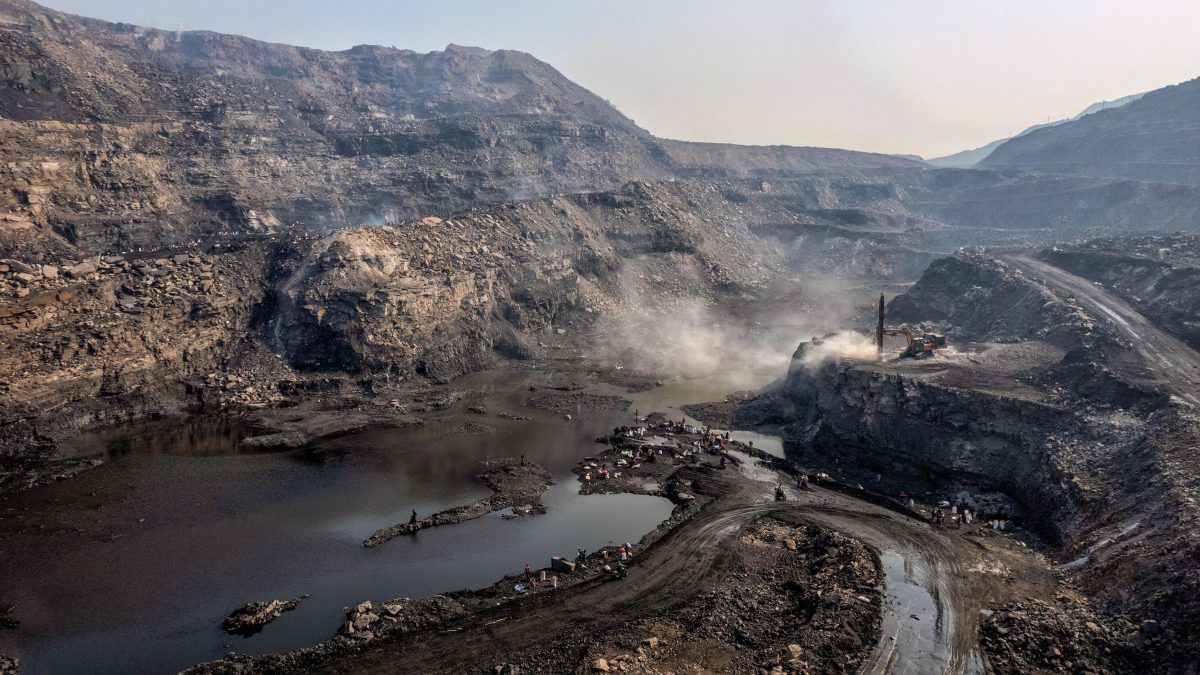
Prime Today News Desk: India’s pipeline of proposed coal-mining capacity rose sharply in 2025, reaching about 638 million tonnes per annum, according to a new report. The increase represented almost all of the expansion in the global coal-project pipeline during the year.
The finding highlights the tension between India’s rapid renewable-energy growth and its continuing reliance on coal for electricity, industry and energy security. A project in the planning pipeline is not the same as an operating mine, but the scale of the proposed capacity indicates the direction of current investment decisions.
Why coal remains important to India
Electricity demand is growing as the economy expands, households consume more power and manufacturing capacity increases. Coal plants provide a large share of round-the-clock generation, while storage and transmission infrastructure for renewable power are still developing.
Domestic production can also reduce dependence on imported fuel and protect utilities from international price shocks. These energy-security arguments have encouraged new mines and expansion proposals even as solar and wind capacity rises.
Environmental and financial questions remain
New mines can affect forests, water, local air quality and communities living near project sites. Approval processes need credible impact assessments, rehabilitation plans and consultation with affected people. Methane emissions and the carbon released when coal is burned add to climate concerns.
There is also a long-term investment risk if cleaner generation, storage and grid upgrades reduce coal demand faster than expected. Policymakers must distinguish between capacity needed for reliability and projects that could become underused assets. The reported 638 mtpa figure should be read as proposed capacity; actual production will depend on approvals, financing and construction.
Questions for project evaluation
Each proposal should disclose expected production, water use, forest impact, transport infrastructure and the demand assumptions that justify the mine. Decision-makers should also test whether grid storage, efficiency or renewable generation could meet part of the same need at lower long-term cost.
Transparent project-level data would allow the public to distinguish a strategic reserve of capacity from a pipeline that is likely to create unnecessary environmental and financial liabilities.
Source: Business Standard. This is an independently written report based on the cited reporting.